HEALTH COLLABORATIVE
UX DESIGN & PRODUCT EXPERIENCE
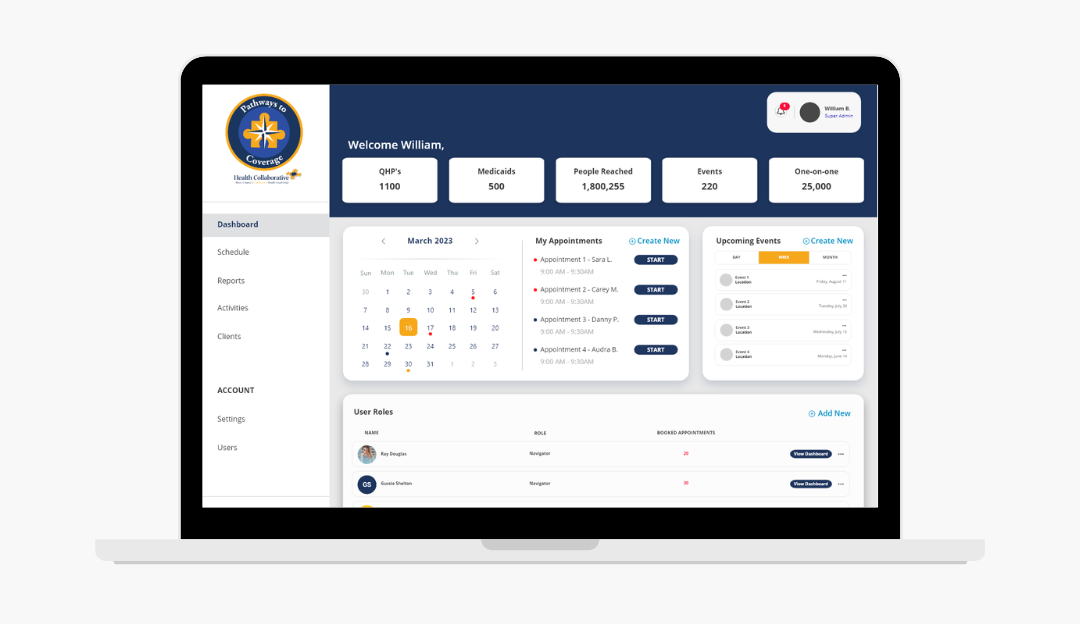
Click here for Health Collaborative Prototype
PROJECT OVERVIEW
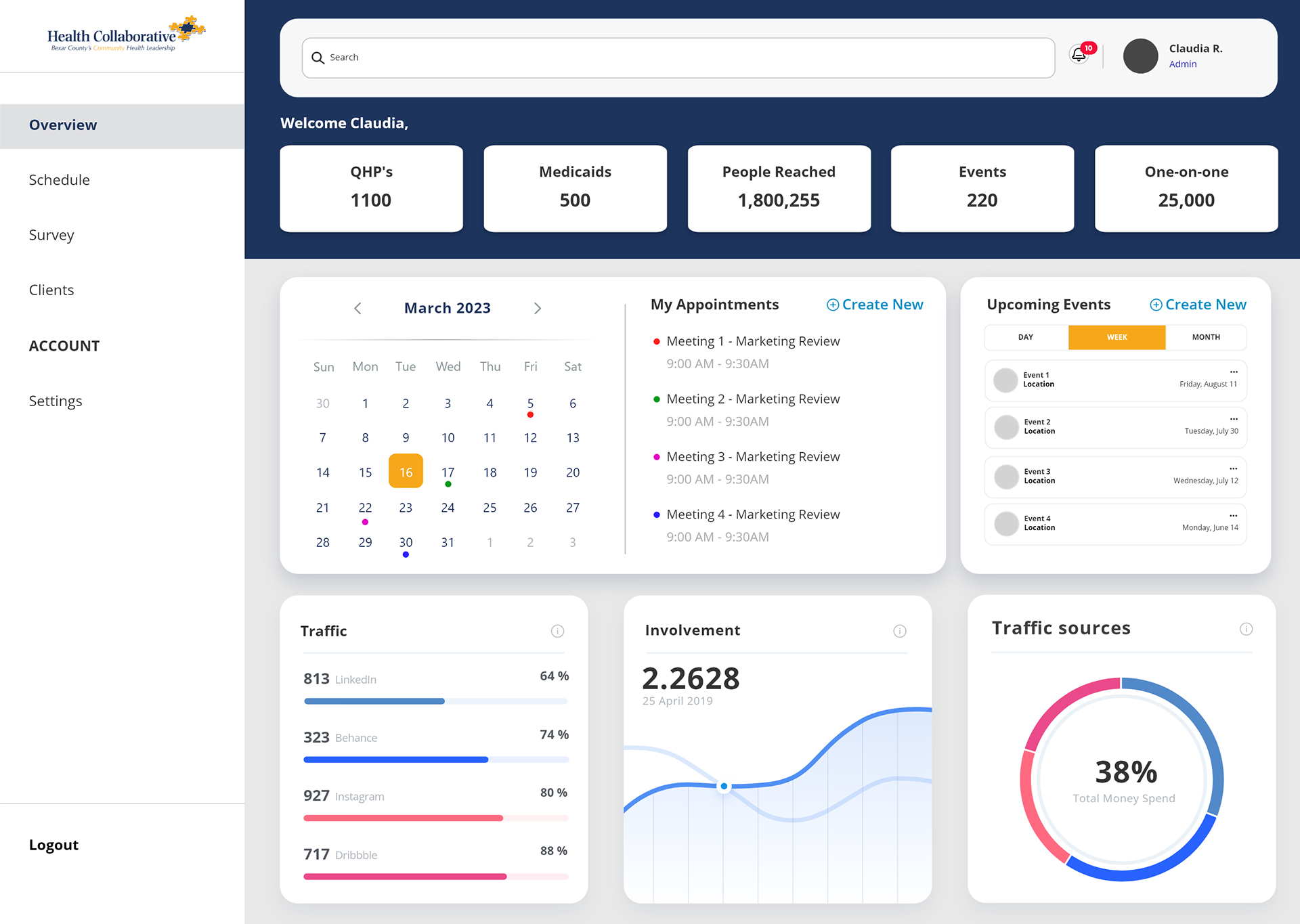
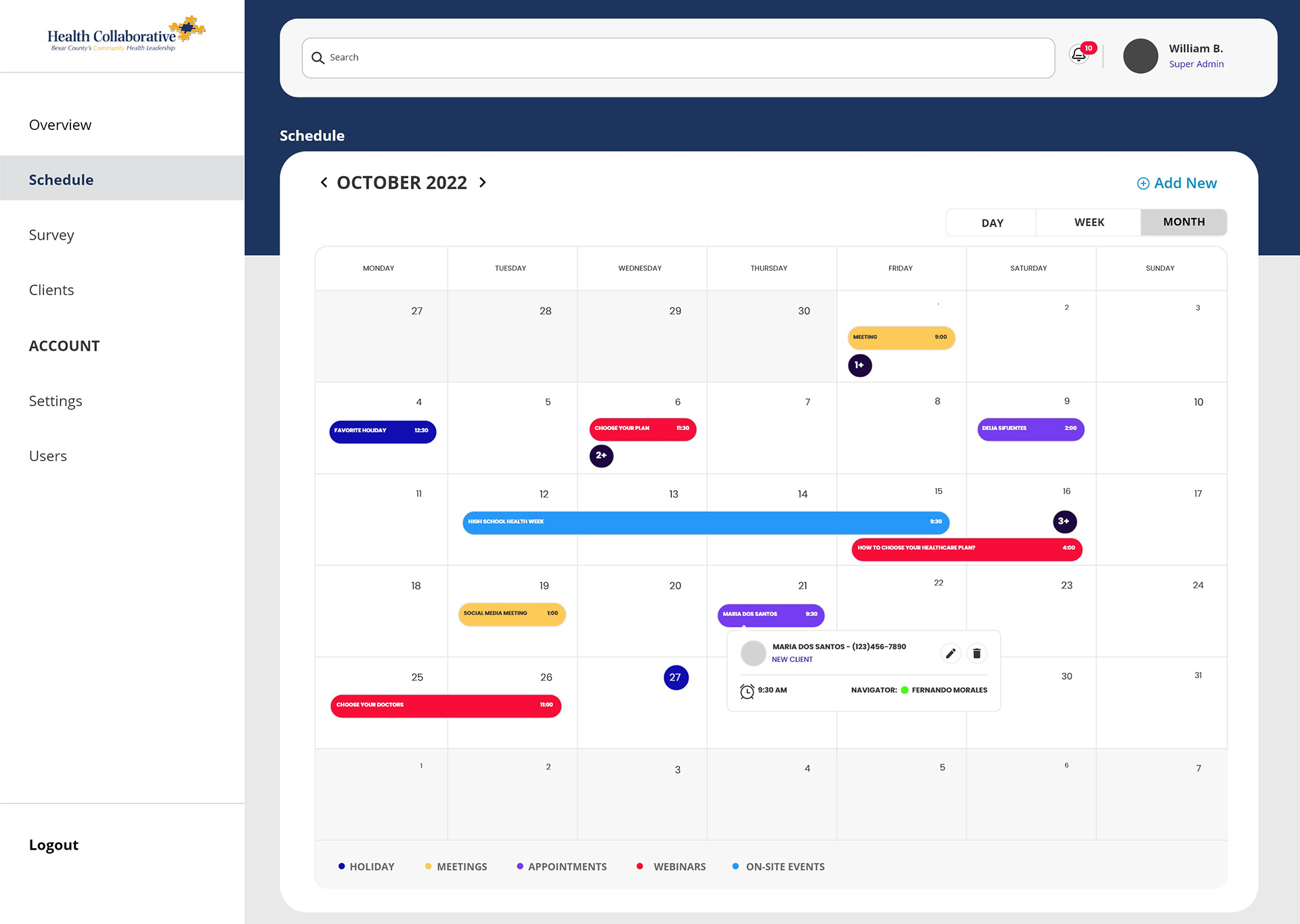
Designed a user-centered application to support healthcare professionals in managing client appointments, communication, and data more efficiently. Focused on improving usability, streamlining workflows, and creating a more connected system.
THE CHALLENGE
Healthcare teams were relying on outdated and disconnected systems, leading to:
- Inefficient scheduling and appointment management.
- Manual, paper-based tracking of client information.
- Limited visibility into client data across teams.
- Communication gaps between staff and clients.
These challenges made it difficult to deliver timely and coordinated care.
My Role
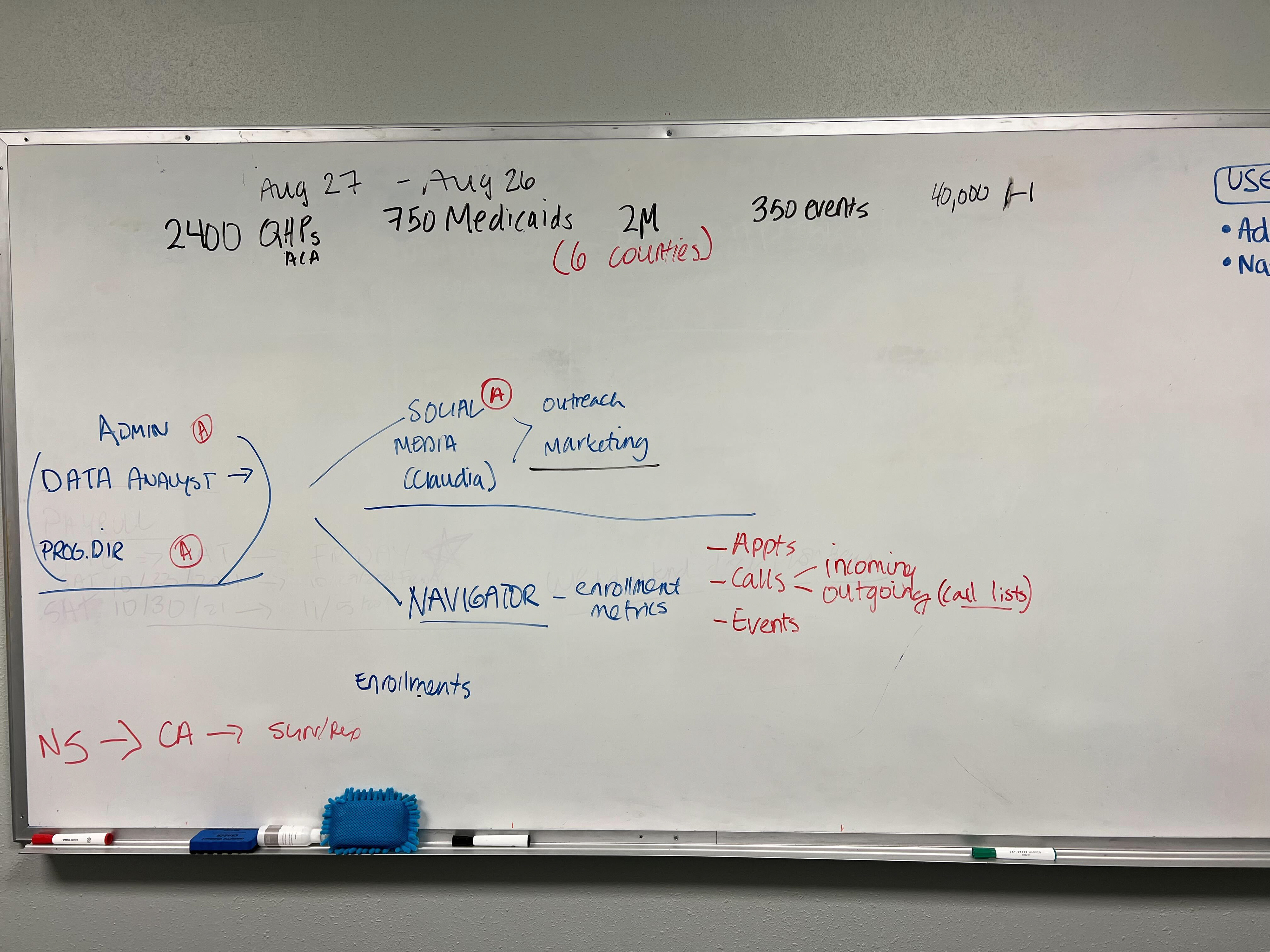
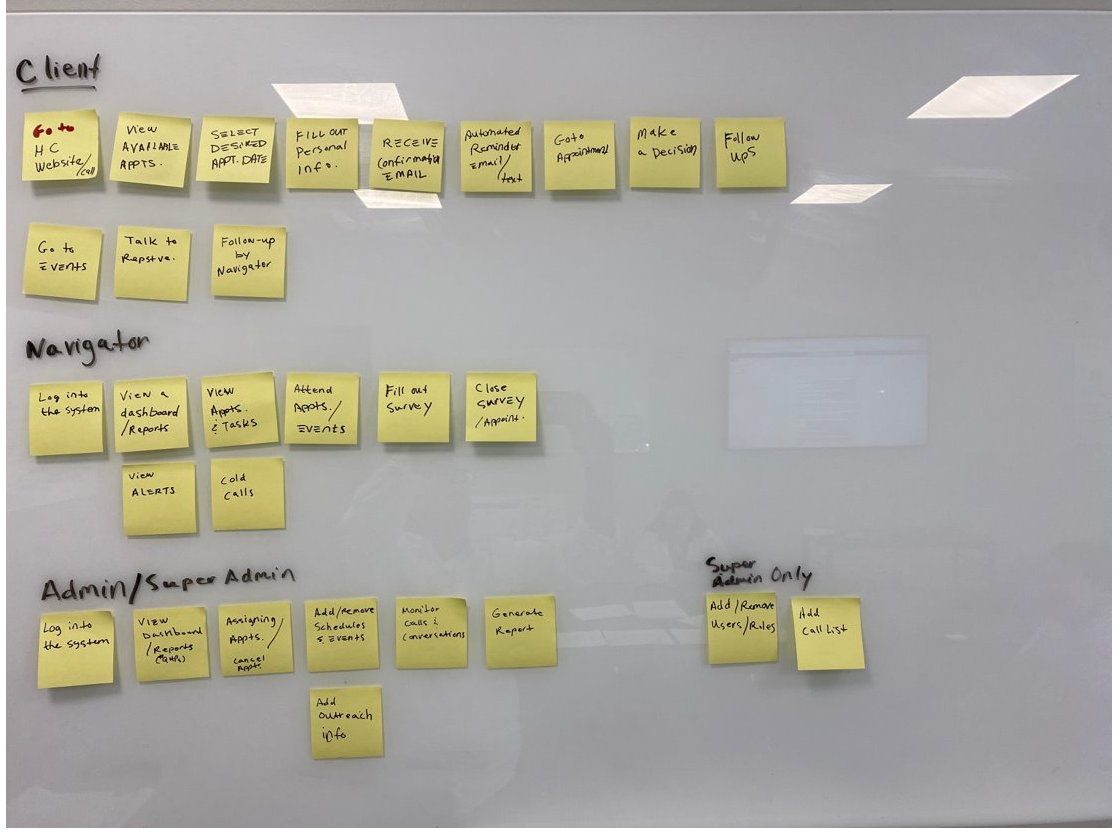
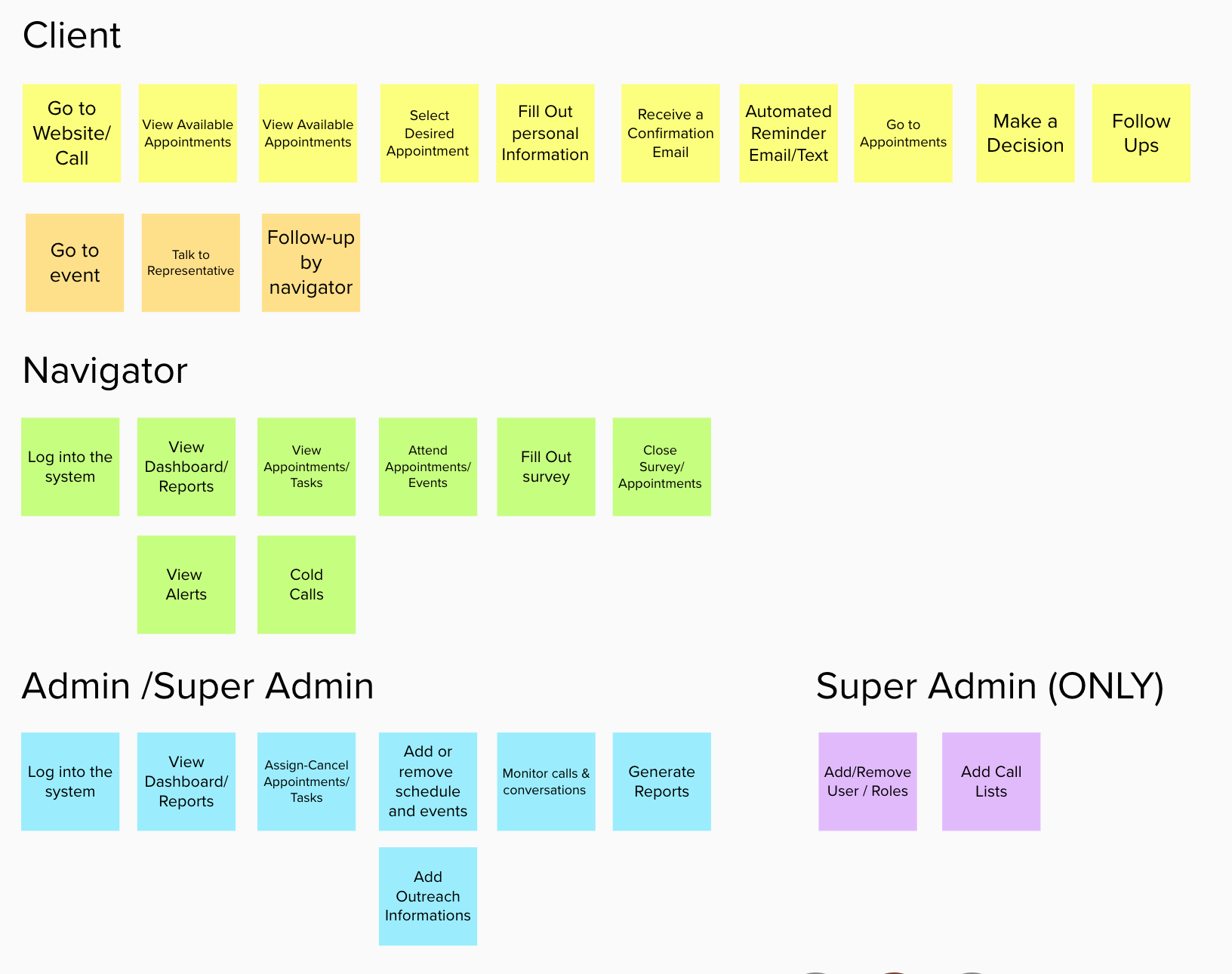
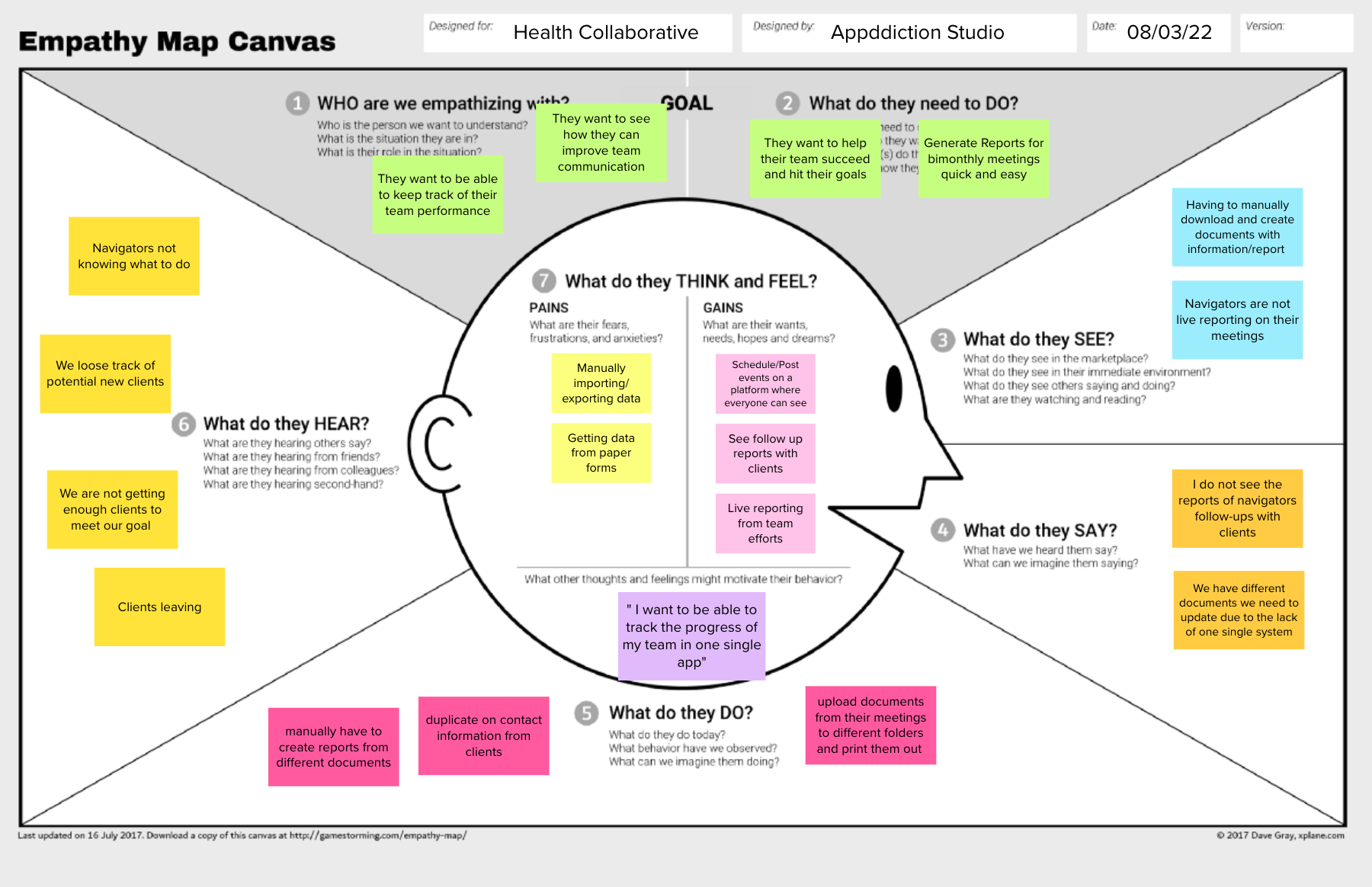
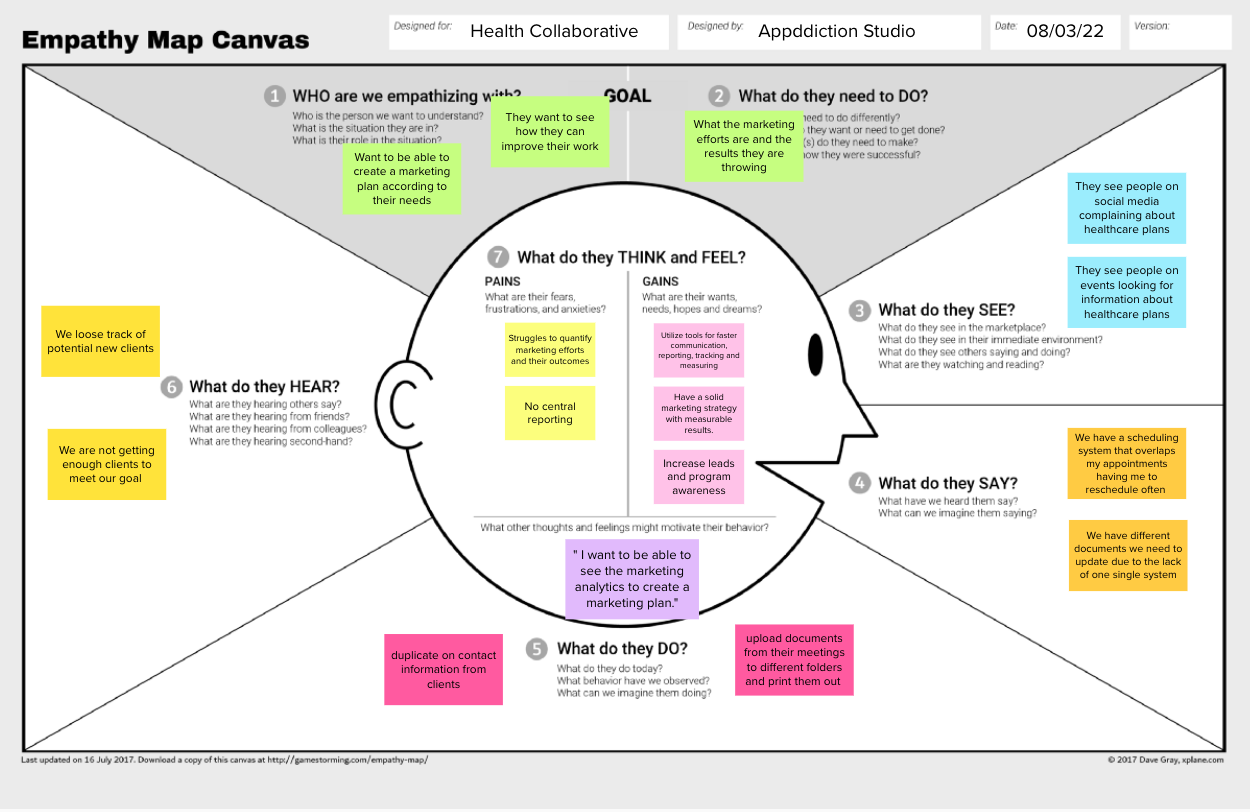
- Led UX research and strategy, facilitating service blueprint sessions and empathy mapping to understand user needs and workflows.
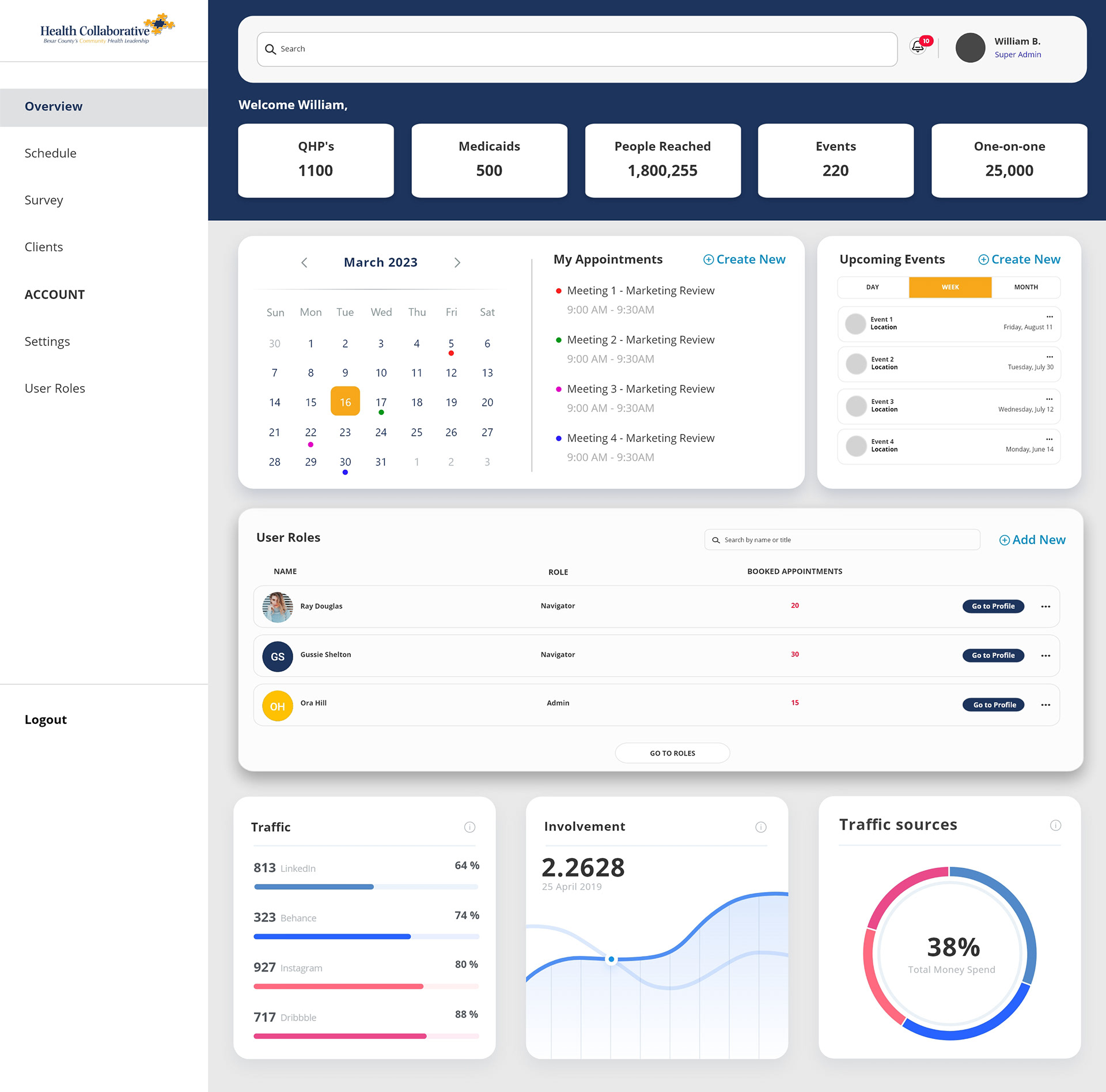
- Developed personas for Navigators, Admins, and Super Admins to guide design decisions throughout the project.
- Designed intuitive, user-centered interfaces focused on usability and accessibility.
- Collaborated closely with developers to ensure accurate implementation and maintain design integrity.
- Supported QA and usability testing, identifying and resolving issues before launch.
Strategy
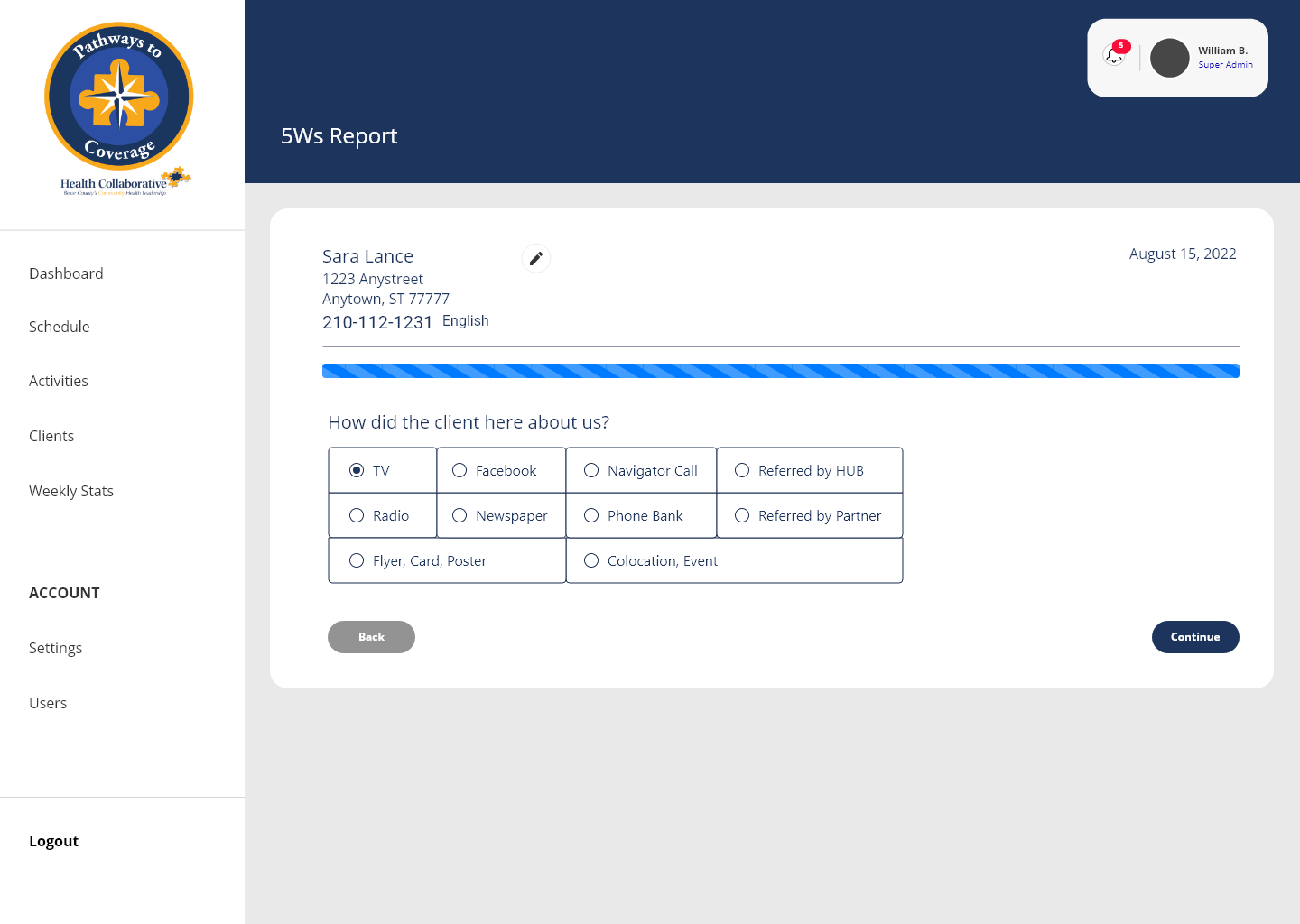
- Simplified complex workflows by designing clear and structured user flows for scheduling, client management, and communication.
- Centralized client data into one system to improve access and reduce manual processes.
- Designed role-based experiences tailored to different user needs and responsibilities.
- Focused on usability and accessibility to ensure the platform was intuitive for a wide range of users.
RESULTS
- Successfully launched the application, receiving positive feedback across all user groups.
- Increased efficiency by streamlining scheduling and reducing reliance on manual processes.
- Improved user satisfaction through intuitive design and simplified workflows.
- Enhanced data management by transitioning to a centralized digital system, enabling faster access to client information.
This project demonstrates how user-centered design can transform complex healthcare workflows into intuitive, efficient experiences. By combining research, strategic design, and iteration, the application improved usability, streamlined operations, and supported better coordination across teams.